Test entry to test RapidBlog syncing. Disregard.
Tuesday, January 3, 2012

Sunday, January 1, 2012
Congress has overturned the hare-brained ban on incandescent light bulbs that the Obama administration had forced onto the public. Alas, in the meantime all our factories to make these old reliables are closed.
Although I've converted 90% of my house to CFLs, there are many shortcomings. Among those are the fact that they can't be guaranteed to work in low temperatures. (I even wound up talking to a tech expert at GE to verify that.)
The reader comment on the article below outlines yet another exception to their usability.
A reader comment of value:
uncleFred
~~~~~
I live at the maximum distance from the pole transformer allowed by the power company. As a result I suffer a greater range of voltage fluctuations than is typical. The fluctuations are within the maximum allowed by the specifications guaranteed by the power company so there is nothing to “fix”. Incandescent light bulbs tolerate these voltage fluctuations quite well. CFL’s die within 6-8 weeks.
The only solution offered by the power company is for me to pay for the installation of a pole transformer closer to my house, or move my feed to a line that runs along a different part of my lot where the is a closer transformer. The least costly of these choices is about $8,000. My continuing to use 100 watt incandescent bulbs is by far the most efficient choice, and will remain so even if the price of those bulbs were to be double or even triple that of CFLs.
Market solutions allow consumers to make the best choice for their individual situation, not be forced to use a solution that someone wrongly considers “pretty much better in every way”. hat is what freedom is all about. The so called “efficiency standards” were arbitrarily set...

Friday, February 25, 2011
My Review of Invacare Tracer EX2 36 lbs. Wheelchair
Originally submitted at 1-800-Wheelchair

The Invacare Tracer EX2 Manual Wheelchair sets the new standard in manual wheelchairs. 5 Year warranty on frame and crossbraces. Meets RESNA standards for manual wheelchairs in product performance.
Two cheap manufacturing defects
By DaddyWarbucks from Minneapolis MN on 2/25/2011
Pros: Comfortable
Cons: Poor Construction
Best Uses: Daily Use
Describe Yourself: Elderly, Long Term User
I have not one but TWO of these chairs, and spend all day in them. They missed getting a top rating for generally first-rate construction because of two chintzy defects. (Will the manufacturer read this review and take corrective action?)
1) The side fittings that the armrests slip into are made of cheap fiberglass or plastic instead of metal, and broke on BOTH of my wheelchairs. Worse, they break when you're using the armrests for support getting up, which can result in an accident!
I had to spend hours on the phone finding some way to order replacement fittings, which they charge an outrageous $12 each for. (And 1-800-wheelchairs will NOT help you on this.)
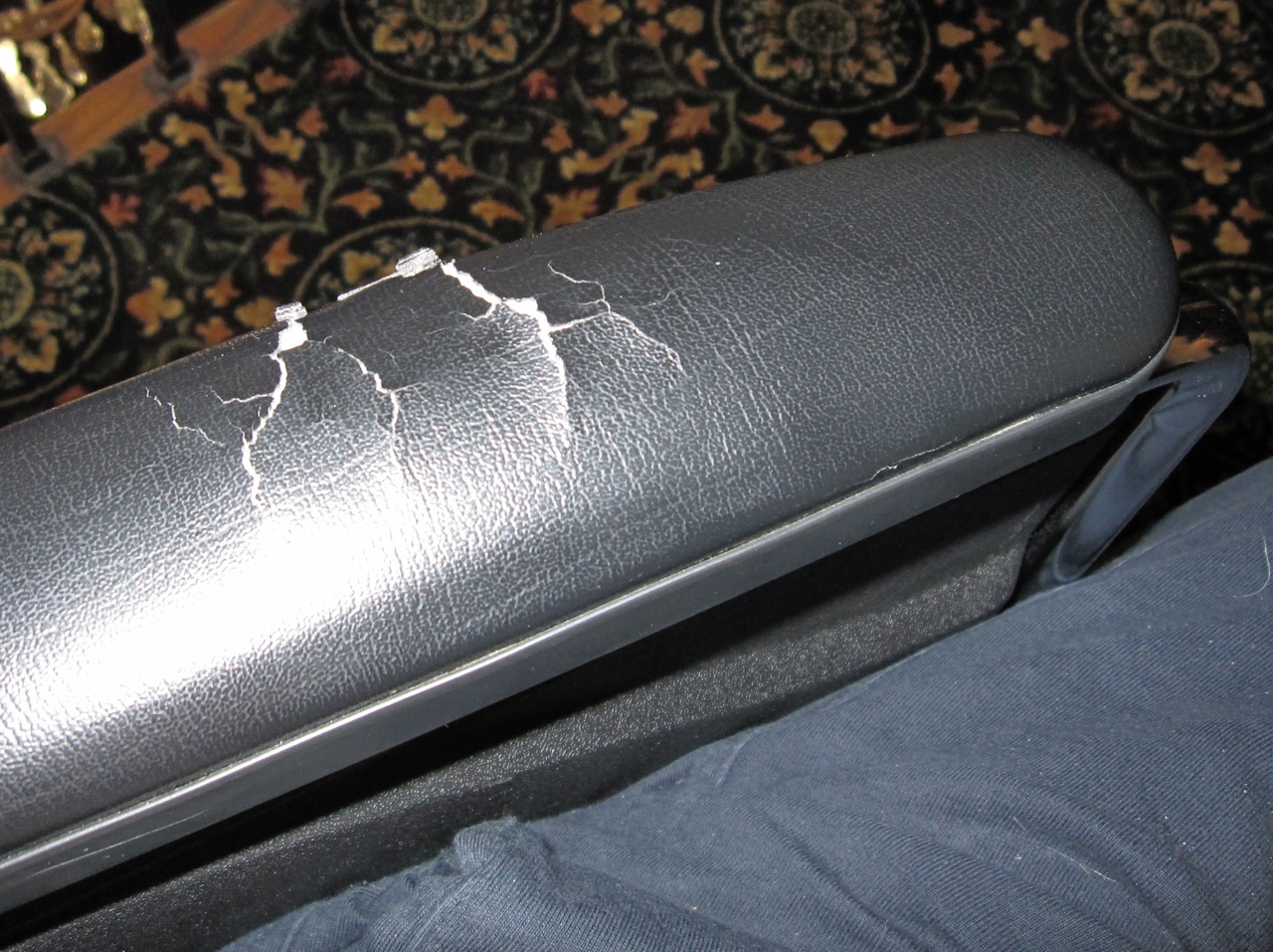
2) The vinyl covering the padded armrests is so thin that it will crack within a year of use and rub your forearms raw. (Click on the picture below to see how cheap it is.) I even special-ordered black fabric tape to fix them, but have given up and had to unscrew the pads permanently.
Contrary to another review, the seat is extremely comfortable, and all the other construction features are fine.
Unfortunately, this is an example of somebody at the manufacturing plant deciding to save a few pennies and sabotaging what could otherwise be a virtual Volkswagen of wheelchairs.
Cheap vinyl on armrests cracks
Tags: Picture of Product
(legalese)
Wednesday, October 6, 2010
Door-to-door ripoffs
Never buy anything from door-to-door peddlers!
There are a bunch of unscrupulous outfits that con do-good outfits, usually in inner cities, into sending minorities out peddling. The young black males don’t know any better, nor do their well-meaning organizations.
We had one of those in Raleigh. A well-spoken sincere young guy was making the rounds in our gated subdivision, Trego (which ordinarily had no peddlers). I said the magazine I considered, Road & Track, seemed expensive. Seemed like his rate was more than R&T charged in its own mag. "Oh no," he said. (Probably in ignorance.)
Then-wife norma and I agreed to take some subscriptions out of guilt. The next day I checked a recent R&T, and sure enough, their own sub card in the mag was half or a third of the rate the peddler was charging. We called and cancelled. We felt sorry for him, but really angry at the corrupt middleman who was foisting this scheme on do-good white folks.
Last month, it happened here in MSP, with not one but two guys, somewhat scary. (My wife could have got rid of them by asking if they had a soliciting license, which MSP requires for any door to door.) Same deal. We said no, but later found that one of our neighbors signed up for a batch of magazines out of sympathy.
It does society no good to rip off customers, hold up false hopes for minorities, and encourage door-to-door peddling.
The magazine middlemen who run these scams deserve a place in hell.
Wednesday, August 25, 2010
Blogger woes
In reply to a long list of people on a Blogger forum bitterly complaining of their work disappearing before being posted to blogspot.com sites:
I suffered the same fate yesterday!
In my case, invoking the Blockquote tool froze Safari (Mac) twice in a row, and inexplicably half my post was lost and/or overwritten by a partial version of the post.
This was not the fault of any other application or the Mac or me. It was due to a problem in Blogger itself!
I now have stuck a sign above my monitor saying NEVER NEVER COMPOSE IN BLOGGER! I compose in Pages and paste the text in afterwards. (I already was used to occasionally importing pasted text from other sources into Pages to fix spurious line-spacing issues.)
But it’s a shame to have to do this.
I also just spent $80 for Keylogger. Details here:
I’ve set this app saves screenshots every 3 minutes and all keystrokes. (FYI, the keystrokes log can be a bit tedious to sort through; if I had another Blogger disaster, I’d likely rekey the post by viewing a series of the screenshots. The Keylogger JPGs can be blown up on the screen so you can read every bit of type, no matter how small, in any captured window.)
I am irritated that I should have to purchase such software, but after this disastrous incident losing a blog that I’d carefully worked on for hours, I won’t risk another catastrophe.
(FWIW, Spector Pro, another keystroke logger tool, seems to have a superior interface, but they no longer support PPC, only Intel Macs. Bastards!)
Stopping catalogs
"Save time, save trees, save the planet" is the mantra of one web outfit that will charge you a fee for cutting down your unsolicited mail. Oh, and stop global warming, too!
I get more DM and catalogs than anyone I know, and they're sometimes a bit of a pain to throw out.
Before you get whacked out about "dead trees," know that printing paper is made from fast-growing species produced just for that purpose. True, catalogs use up printing ink and photography time and provide employment for models.
I get more DM and catalogs than anyone I know, and they're sometimes a bit of a pain to throw out.
But if you really want to cut down on catalogs, you can sign up to stop them coming.
This is just one resource:
http://www.catalogchoice.org/
The reality is that I periodically find items I like in catalogs, and at this point I choose to receive them.
If you don't want them, you can choose not to get them. Don't get your knickers in a knot about it.
A note about periodicals:
A note about periodicals:
Magazines lose money for the USPS, and they get their low rates only because of lobbying. They have a big platform to complain from when rate hikes are proposed.
Dealing with junk phone calls
Unsolicited phone calls are a scummy practice. They're interrupting you, taking up your time, and using your equipment to harangue you.
The business pays coolie wages to unskilled people to work in their boiler rooms. (Many actors and screenwriters cite these jobs as their real-world employment experience, which is one reason they so eagerly portray roles in naïvely anti-business films.)
This business exists solely because of cheap long-distance srvice. It used to be that a business at least had to pay for a WATS line. Now rates are so cheap, they can harass you from across the continent.
There are just a few things you need to keep in mind when you get a junk phone call:
1) If you buy something or respond positively, they win.
2) If you just hang up, they win.
3) If you keep them on the line, tying up their robo-callers or solicitors and phone time, you win.
Almost nobody understands these last two points.
When you get a call, just set the phone down. Or if it's a live caller, say "Can you hold on for a minute?"
When (eventually) they disconnect, you'll hear that irritating beep-beep-beep "If you want to make a call" from the phone company. Then hang up.
One of my former business partners had a nice technique he used on boiler-room brokers or investment outfits. (This was before the do-not-call legislation.) He'd let them prattle on for five minutes, making little positive noises, until they went in for the close.
Then he'd say, "Gee, this really sounds interesting, but I just declared personal bankruptcy."
If you think up any other good tactics, send them to me and I'll post them. Let's share the revenge!
Tuesday, August 24, 2010
"Do Not Call" list failings
Junk faxes became illegal when congress found their fax machines tied up with junk faxes. Junk cellphone calls were banned because of the obvious thievery: solicitors were using your cellphone minutes to harangue you.
Miraculously, junk phone calls were also banned some years ago.
Sort of.
You probably know you can get your phone number(s) put on the "Do Not Call" list run by the government, free of charge.
When this initiative was announced, the phone-solicitation industry whined that thousands of phone solicitors would be fired. I can't think of anyone who deserved it more.
https://www.donotcall.gov/
There are three problems:
1) Political, polling, and charitable organizations are exempt. As are any commericial enterprises that you might remotely "have done business with."
The business guys generally play fair, because they run the risk of irritating you. Saying "take me off your list" is usually all it takes to stop calls from a company.
2) The enforcement of these rules is weak. I've gone through the trouble of filing complaints, which requires you to fill in endless detail, and I've never gotten a response from the gov't.
https://complaints.donotcall.gov/complaint/complaintcheck.aspx?panel=2
(One would expect with all the bogus "jobs created" figures the administration throws around, they could have put 1,000 people to work doing some enforcement. But dream on.)
3) Because of this weak enforcement, there are always some scumbag outfits that flout the rules. When you confront them with their violation, they either play dumb or just hang up on you.
For tactics you can use, see "Dealing with junk phone calls" on a separate post.
Also see the post on "junk mail."
Tuesday, June 1, 2010
A SLAPP in the consumer's face
Should you be able to speak out against companies that have treated you badly?
It should be your right, but in some states they can intimidate you with lawsuits called SLAPP (Strategic Lawsuits Against Public Participation).
One would assume a company that made good products and valued its reputation would try to resolve problems instead of resorting to these slimy tactics, and you're right.
But the sleazier the company, the more likely they are to resort to this sort of legalistic thuggery.
One advantage for the aggrieved student featured in the article: He's got precious little to lose and no assets. They can't get blood out of a stone.
And I'm sure there are lots of eager-beaver pro bono lawyers out there who'll be happy to take on his case.
Plus, if his Facebook page now has 12,000 members, he's got lots of potential allies in any spitting contest.
http://www.nytimes.com/2010/06/01/us/01slapp.html?th&emc=th
Saturday, May 29, 2010
New yorker subscription rip-off
What kind of fools do they think we are?
Last week, our household received a renewal form from The New Yorker blithely requesting $59.95 for a one-year renewal. Maybe you got one yourself.
Should you mail it in? Not if you have half a brain.
Anyone can get it for $39.95 through Amazon. Or for the same price (with free T-shirt) from Conde Nast's own website.*
(Albeit the latter adds its own scam via a "with automatic renewal" bait-and-switch tactic.)
What a rip-off!
Why would any company want to treat its best customers, those who already subscribe, so shabbily? You invite them into your home and they want to steal your silverware.
It passeth all understanding. Clearly the strategy is set by professional theives or thimble-brained MBA twits. Care to vote on which is to blame?
I won't talk here about the "doctor's rate" deals, which call for another post by themselves.
The hottest part of hell
To me, the hottest fires of hell will be occupied by
- people who abuse animals
- anyone who rips off senior citizens
- flimflam "charities"
The latter is characterized by scam charities that spend more fund-raising than they give to their purported beneficiaries. Many of these are flat-out bunco operations run by the slimiest of all slimeballs.
They prey on the generosity of well-meaning individuals, many of which are themselves not flush with cash.
And of course many of you will recall the repugnant Jim and Tammy Baker who bilked viewers of millions of dollars. It's a travesty that Baker served only a short jail term.
Thursday, May 6, 2010
StarKist: one of the year's dumbest ad campaigns
For almost fifty years, StarKist tuna was represented by the "Charlie the Tuna" commercials.
Granted, they were corny, but mostly pleasant. And they built cumulative brand equity. It's the kind of iconic stuff that Leo Burnett advertising specialized in, like their creations for Green Giant, Marlboro, and the like.
So I was astounded to see a new campaign featuring goofy people making fish-faces. This is very entertaining when you're about three years old, but for anyone who doesn't drool, it is so irritating that one instinctively grabs for the remote.
I imagined Leo Burnett spinning in his grave. But it took about two minutes Googling to find out this client has a new agency in Boston that I'd never heard of.
I suppose I should give this agency credit for its apparent policy of hiring half-wits to work in the creative department. But that's more praise than they deserve.
These are what I call "one-time commercials." That means spots that may seem novel when presented to the client, but are boring or repellent the second time you see them.
Alas, with the declining state of advertising creative and lack of adult supervision, this kind of drivel is becoming all too common in the biz.
If commercials are merely boring or stupid, I rarely have to endure them a second time. (This is why God invented the DVR.)
But when they rise —or more properly sink— to the level of major irritants, I am impelled to active hatred. That means writing down the product name on the BANNED category in the shopping list on the refrigerator door.
Thus, Chicken of the Sea (or any brand other than StarKist) will henceforth get my purchasing dollars, just by default.
So there you have it: fifty years of brand equity, totally squandered by one idiotic campaign.
That's quite an accomplishment.
Perhaps they'll invent an awards category for this.
Wednesday, December 23, 2009
Identity theft
Unfortunately, many outfits peddling "identity protection" are themselves rip-offs.
http://www.privacy.ca.gov/res/docs/pdf/cfa_id_theftservices.pdf
Late fees are a rip-off!
When credit cards charge you a late fee or penalty, this is nothing more or less than a way for them to rip off their customers.
You don't necessarily have to pay that fee. If you've got a good payment record, you can often call and get it waived. You can't do it too often, but I've done it several times in a year. (I run a lot of purchases through my credit accounts.)
Sometimes you don't have to do more than ask. If they resist, you can ask to talk to a supervisor — or their "account retention department."
It costs the company at least $45 to gain a new account. Keeping your business is worthwhile to them.
You might have to threaten to close your account — but be prepared to back it up.
I don't carry balances, but if you do, you're worth even more to them. They not only collect the fee off each purchase (about 3%) but also a fat interest charge for every month. This alone is rather outrageous, since the Fed is lending out money for almost zero interest.
Later: Why you should have only two credit cards, make the card companies' dreaded "churn rate" work for you, and how to get some of that purchase discount back in your pocket.
Also: The credit card that never gets paid off, the danger of home equity lines, and deferred gratification.
Subscribe to:
Posts (Atom)
